
.png)
The role of a project manager has changed.
Once, the job was about keeping projects on time, on budget, and within scope — the classic trifecta of delivery. But the industry is shifting. Job listings are now filled with hybrid titles: Project Manager / Creative Strategist. Project Manager / Designer. Project Manager / Copywriter.
Let’s be honest: that’s a lot to ask of one person. It’s four roles in one, each requiring different skill sets, mindsets, and energy. Not to mention salaries.
But the rise of these “unicorn” job descriptions does tell us something important, clients and agencies are expecting more strategic, big-picture leadership from their PMs.
That doesn’t mean every PM should suddenly learn Figma or start writing headlines. It means that today’s PMs have to show up differently, more as project leaders than project administrators.
From Task Manager to Strategic Partner
“A great PM doesn’t just manage a project, they read the room and see the whole pie.” *1
This quote perfectly captures what separates a “good” project manager from a transformational one.
Founders, and the best PMs, don’t just look at what’s on their plate. They look at how that plate fits on the table, who’s sitting around it, and what meal the group is actually trying to create together.
That’s the difference between execution and leadership.
1. Read the Room, Not Just the Brief
Most PMs are great at managing the work. The best PMs also manage the energy.
Reading the room is about awareness. How is this project landing with your team? With your stakeholders? With other projects running alongside it?
A more junior PM will do whatever it takes to achieve the goal and deadline of the project, a more experienced PM, that might have been involved in more than just their own project kick off, will look at the bigger picture and how their project will fit in and might even recommend (get ready for this...) that this project should not move forward given what is going on around it.
That’s a huge difference.
When a PM understands the emotional and organizational climate around a project, they can lead it with empathy, not just efficiency. They protect morale and momentum.
A founder mindset asks:
“What’s the impact of this project on the people building it?”
And that awareness ripples outward.
It helps PMs advocate for the team when timelines clash. It helps them build trust when clients feel pressure from leadership. It helps them keep the project human.
2. Zoom Out, See the Whole Pie
“Don’t just look at your project. Look at the pie” is just as important.
For PMs, that means asking:
-
How does this project fit into the client’s larger strategy?
-
How does it connect to other initiatives happening right now?
-
What’s the business outcome behind this deliverable, not just the output?
When PMs zoom out, they stop treating projects like isolated islands. They see the system, not just the sprint.
And sometimes, that wider perspective leads to uncomfortable, but necessary, conclusions.
An experienced PM might say,
“Given what’s happening with the other campaigns and capacity, this project shouldn’t move forward right now.”
That’s not negativity. That’s leadership.
Junior PMs do whatever it takes to deliver their project. Senior PMs ask whether delivering it right now is actually the best move for the business and the team.
3. Bring PMs Into Strategy, Early
Too often, PMs are brought in after the strategic decisions have been made, after budgets are set, scopes are drafted, and deadlines are promised.
By the time they arrive, the table is already set. They’re expected to serve the meal, not help plan it.
But if you want your projects to run like clockwork, and actually deliver strategic value, your PMs need to be part of the conversation before the kickoff.
That means including experienced PMs in:
-
Scoping discussions (they’ll spot risks and dependencies early).
-
Sales or proposal meetings (they’ll keep commitments realistic).
-
Quarterly planning or resource alignment sessions (they’ll connect the dots between projects).
When PMs have visibility into strategy, they can translate it into execution far more effectively.
A PM brought in early doesn’t just manage the plan, they help shape it.
And that’s when the partnership between strategy and delivery becomes seamless.
4. Leadership Is More Than Managing Tasks
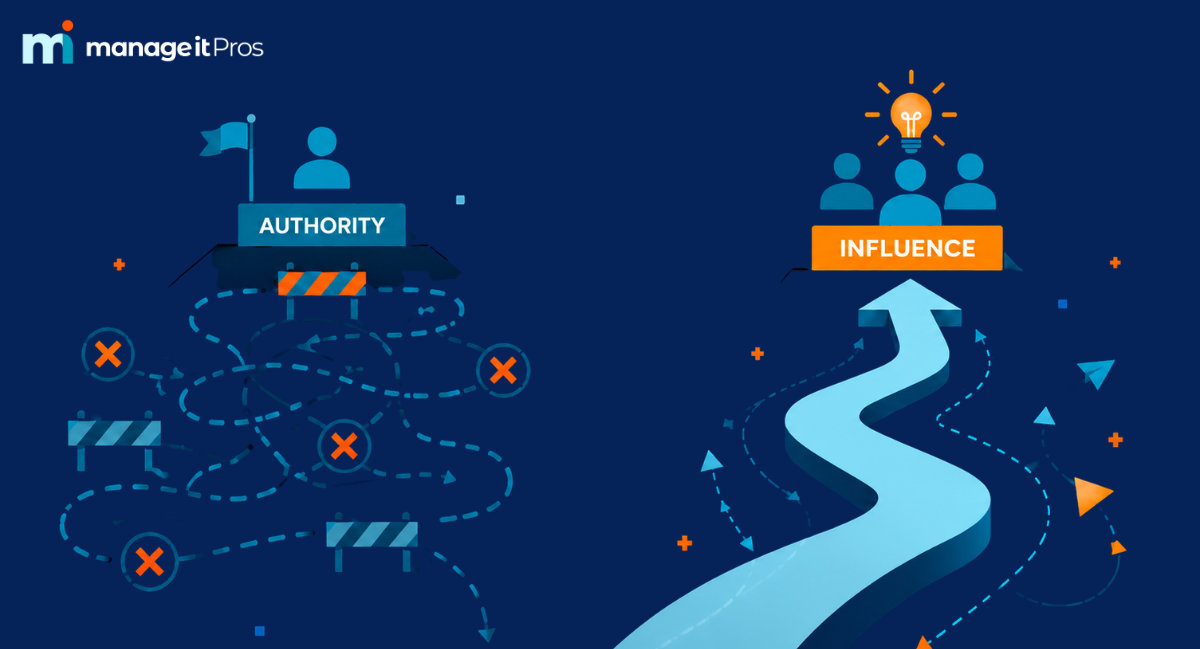
Here’s the truth: project managers already act like leaders every day. They just don’t always get credit for it.
They navigate competing priorities, align stakeholders, mediate creative and client needs, and keep the team focused. That’s leadership in action, it’s just not always labeled that way.
But stepping into a founder mindset means leaning even further into leadership qualities like:
-
Curiosity: Asking “why” before saying “yes.”
-
Courage: Pushing back when the work or the team needs protection.
-
Vision: Seeing the connection between today’s tasks and tomorrow’s goals.
-
Empathy: Understanding how people are responding to change, not just what’s changing.
When PMs operate with those qualities, they stop being “traffic controllers” and start being “navigators.”
They’re not just moving projects from A to B. They’re steering the organization toward better outcomes.
5. Clients: Expect (and Empower) More from Your PMs
If you’re a client hiring or partnering with a senior project manager, expect them to challenge you, respectfully.
Expect them to ask tough questions like:
-
“How does this project tie to your business goals this quarter?”
-
“Are there competing priorities we should be aware of?”
-
“Can we talk about capacity before we lock the timeline?”
These questions aren’t friction, they’re alignment.
A strong PM asking to join strategic meetings or budget discussions isn’t overstepping. They’re ensuring the project succeeds beyond delivery.
You don’t need a PM who just says yes.
You need one who understands when the right answer might actually be, “Not yet.”
6. PMs: Expect Pushback, and Keep Pushing
On the other side, PMs who step into this more strategic space should expect some resistance at first.
Not everyone is used to project managers asking to sit in on quarterly planning or strategy sessions. Some may see it as scope creep. Others might assume it’s not “your lane.”
Push anyway.
Because the more you understand the business context, the “why” behind the “what”, the better your project decisions will be.
And the more your team and client see that your goal isn’t control, but clarity, the more they’ll trust your perspective.
Don’t wait for permission to think strategically.
Start showing up like someone who already does.
7. It’s Not About Being a Unicorn — It’s About Being Invested
The goal isn’t to turn PMs into hybrid strategist-designers-copywriters. That’s not realistic, and it’s not sustainable.
The goal is to cultivate PMs who think and act like owners.
A PM with a founder mindset doesn’t just ask,
“How do we hit this deadline?”
They ask,
“Is this the right thing to build right now?”
They understand that time, attention, and energy are limited resources, and they use them wisely.
They’re not waiting for direction; they’re helping shape it.
That’s what “running projects like a leader” really means.
8. The Leader Mindset in Action
So what does this look like day to day?
Here are a few shifts we see in PMs who take this approach:
Situation |
Traditional PM Response |
Leader-Mindset PM Response |
|
Client requests a major scope addition |
“Let’s see how we can fit that in.” |
“Let’s align on priorities, what can shift to make space?” |
|
Team is missing deadlines |
“We need to move faster.” |
“What’s causing friction? Do we have too many parallel priorities?” |
|
Project looks profitable on paper but risky in practice |
“We’ll manage it tightly.” |
“Let’s assess if this work supports the bigger business goals before we commit.” |
|
Feedback loop between client and creative feels strained |
“Let’s schedule another round.” |
“Let’s clarify expectations and create a better feedback framework.” |
9. Why This Matters Now
The agency and creative operations landscape is evolving fast.
Teams are leaner, timelines are tighter, and clients expect more strategic partnership than ever before. The PM role is right in the middle of that change.
That’s why we believe the next generation of project leaders will look less like task managers and more like business partners.
They’ll understand systems, yes, but they’ll also understand people, context, and outcomes.
Because managing a project is about more than keeping it on track. It’s about keeping it in tune, with the business, the team, and the bigger picture.
10. The Bottom Line
If you’re a client, don’t hire PMs who simply check boxes. Hire those who challenge assumptions, ask the right questions, and connect your work to your vision.
If you’re a PM, don’t shy away from thinking bigger. Step into the rooms where strategy happens. Speak up when priorities don’t align. Push for clarity, not just completion.
Because the truth is:
Project managers already wear a lot of hats. But the most important one isn’t “planner” or “organizer.”
It’s leader.
✦ Manage it Pros
We partner with creative and marketing leaders to turn complex projects into clear, repeatable success stories. Our systems bring visibility, accountability, and calm to even the busiest teams, so you can focus on strategy, not the scramble.
*1 Insight shared by Pam Butkowski, SVP of Delivery at Horizontal Digital, during a webinar hosted by DPM, October 2025

.png?width=1209&height=476&name=Newsletter%20CTA%20(1).png)
.png)